
Dreaming Big and Planning Ahead
Designed with educators, backed by psychology, and easy to integrate into your school’s routine.

Plan Objectives
 Teaching Goal-Setting
Help children establish clear, achievable goals for their future.
 Developing Financial Awareness
Equip children with financial literacy skills to make informed financial decisions.
 Strengthening Critical Thinking
Encourage children to analyze options and think strategically before making choices.
 Enhancing Decision-Making Skills
Provide tools for children to evaluate pros and cons when faced with life decisions.

Why This Plan?
This plan addresses the following challenges by developing targeted skills

My child consistently makes poor choices

My child can not distinguish between needs and wants

My child does not evaluate pros and cons

My child is easily influenced
01Setting and Achieving Personal Goals
Guides children in setting realistic, measurable goals and creating action plans.
02Managing Money for Future Success
Helps children understand financial planning and the importance of saving.
03Evaluating Choices Before Making Decisions
Encourages children to consider options critically before making important life decisions.
04Solving Problems Proactively
Teaches children how to think ahead and tackle challenges with confidence and strategy.
Real-Life Applications
How this plan's skills apply to real-world scenarios for everyday success
Courses Included

Goal Setting: Gaining Tools for Success

Emotional

Self-Management
Course Details:
Modules: 4 |
Lessons: 31
Understanding Goal Setting: Learn tools to set and achieve meaningful goals.
Realistic Expectations: Recognize the benefits and challenges of setting achievable goals.

Financial Literacy II
Intellectual
Finance
Course Details:
Modules: 4 |
Lessons: 32
Saving & Investing: Understand saving and investing with banks, stocks, and other financial tools.
Entrepreneurship: Explore entrepreneurship to boost income and manage risk and rewards effectively.

MindCraft: Developing Analytical Skills
Intellectual
Critical Thinking
Course Details:
Modules: 4 |
Lessons: 31
Think Critically: Analyze problems and make informed decisions in any situation.
Overcome Bias: Recognize biases to embrace diverse perspectives and open-mindedness.

Developing SuperHuman Problem-Solving Skills
Intellectual
Problem-Solving
Course Details:
Modules: 4 |
Lessons: 33
Problem-Solving Skills: Master essential techniques to deconstruct and address complex problems.
Decision-Making: Enhance critical thinking for smarter, more effective solutions.
Meet the Course Creators
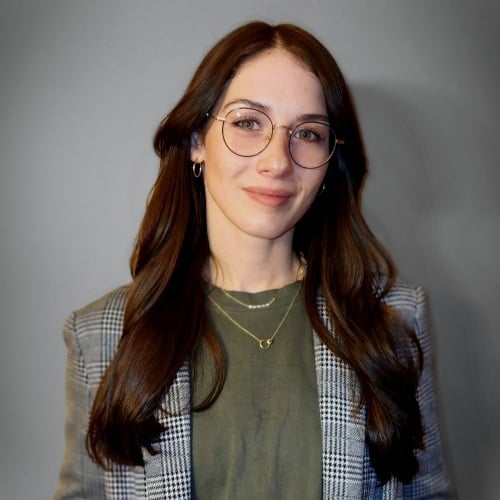
Dr. Ashley Schoener
Goal Setting: Gaining Tools for Success
Dr. Ashley Schoener
Goal Setting: Gaining Tools for Success
Dr. Ashley Schoener, is a a postdoctoral fellow in clinical neuropsychology. She earned her PhD in Counseling Psychology from Ball State University, her master’s degree in counseling from the University of North Dakota, and her bachelor’s degree in psychology from Bloomsburg University of Pennsylvania. She has worked in a variety of behavioral health settings and has clinical experience working with individuals across the lifespan. She has also conducted research, co-authored peer-reviewed publications, and presented at national conferences. However, she always had an interest in teaching and a passion for providing education to the public about her particular areas of expertise. Her areas of interest broadly include affective neuroscience, cognition, and brain-behavior relationships. As such, she has plenty of knowledge to share on a range of topics. She believes learning is most effective when you are able to engage with the learning process, and this does not always have to feel like work. Her goal is to give you the opportunity to learn about some important new skills with a different approach than you're used to! Courses have been developed for the purpose of education, in collaboration with screenwriter, Anthony Crutcher, and artist, Dennis Di Lorenzo. We are very excited to share our courses with you and hope you are able to learn something new from each one you complete!
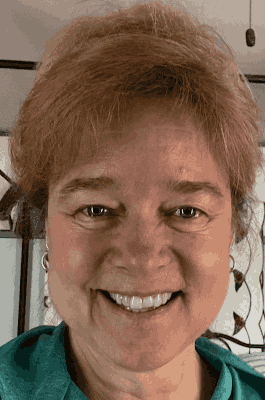
Heather Gossler
Financial Literacy II
Heather Gossler
Financial Literacy II
A part-time teller job led to an MBA from DeSales University in the United States and a 27 year career in the finance and banking industry. I developed a youth banking program at my bank believing that it is never too young to learn to make good financial decisions. I took the program out into the surrounding communities’ schools to teach students basic finance. I then discovered that my true calling was education.I left the executive offices of banking and began my teaching career, which I’ve been doing for 15 years. I went back to school and earned my M.Ed. in Educational Leadership from Cabrini College. I’ve taught middle school students the subjects of U.S.History, English and Language Arts, Science, and Family and Consumer Science which included a unit on personal finance. My ultimate goal is to help students find their passion for learning what it takes to be the best person they can be.
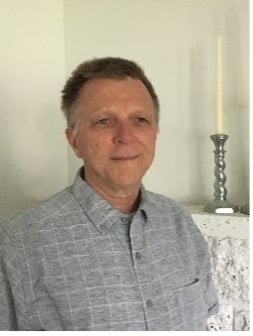
Dr. Jim Dolson
MindCraft: Developing Analytical Skills
Developing SuperHuman Problem-Solving Skills
Dr. Jim Dolson
MindCraft: Developing Analytical Skills
Developing SuperHuman Problem-Solving Skills
Dr. Jim Dolson, EdD, is an accomplished business leader deeply devoted to education at all age levels. With extensive experience across diverse industries and unwavering dedication to teaching, he is the ideal person to develop an outstanding curriculum tailored to middle-school students. As a parent himself, Dr. Dolson understands at a personal level the significance of engaging and impactful learning experiences. His expertise as an instructor at multiple universities highlights his ability to inspire minds and bring out their full potential. Driven by a genuine passion for education, Dr. Dolson excels at creating a well-rounded curriculum that challenges and nurtures students' growth. His successful tenure as a K12 Superintendent reflects his commitment to fostering confident and academically empowered individuals. Families can trust Dr. Dolson’s expertise to provide an exceptional educational journey for students, ensuring they receive the best possible learning experience that prepares them for a successful future.

Dr. Kymberli Barker
Developing SuperHuman Problem-Solving Skills
Dr. Kymberli Barker
Developing SuperHuman Problem-Solving Skills
Dr. Barker is the mother of two fantastic young men, and they are her priority in life. She holds degrees in biochemistry, math, forensics, and psychology. She is a consultant and a professor at multiple colleges, including the Citadel, and Johns Hopkins Center for Talented Youth. She spent fifteen years in public education, prior. Her personal focus is child advocacy and she developed the Guardian ad Litem/(GAL)/CASA program for the Eastern Band of Cherokee Indians. She is tribally and state sworn as a GAL. Her favorite thing is being a mom.
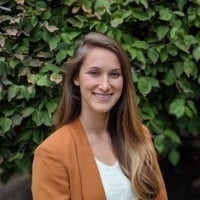
Lauren Hudak
Developing SuperHuman Problem-Solving Skills
Lauren Hudak
Developing SuperHuman Problem-Solving Skills
Lauren Hudak is an educator with over eight years of experience. After graduating from the University of Virginia with degrees in English Literature and Media Studies, she went on to get her Masters in Teaching from New York University. Lauren has worked with all ages of students from Pre-K through college, but she thrives when working with middle schoolers. She believes this is the perfect age to integrate mindfulness, technology, and social emotional learning into student learning objectives. She wants to help students conquer their fears and build a better world. When she’s not teaching, Lauren loves being outdoors, traveling and spending time with her family.