
Adaptive Innovator
Designed with educators, backed by psychology, and easy to integrate into your school’s routine.

Plan Objectives
 Embrace Change
Teach children to navigate uncertainty with creativity and confidence.
 Innovate Solutions
Foster the ability to think outside the box and create impactful ideas.
 Learn Flexibility
Help children adapt to new challenges and perspectives.
 Encourage Curiosity
Promote a mindset of lifelong learning and exploration for your child.

Why This Plan?
This plan addresses the following challenges by developing targeted skills

Has difficulty outside of their comfort zone

Becomes upset when plans change

Has fears that overwhelm them.

Seems oblivious to other lifestyles and beliefs
01Facing New Experiences
This scenario encourages your child to approach unfamiliar situations with curiosity and confidence, fostering innovative thinking.
02Adjusting to New Schedules
This scenario teaches your child techniques to adapt to changes in routines or plans effectively.
03Overcoming Fears of Failure
This scenario equips your child to identify and confront fears that hold them back, consequently building resilience and self-belief.
04Appreciating Diverse Perspectives
This scenario guides your child to engage respectfully with peers from different backgrounds, encouraging a welcoming mindset.
Real-Life Applications
How this plan's skills apply to real-world scenarios for everyday success
Courses Included
Don’t Wait: Create!

Intellectual

Creativity & Innovation
Course Details:
Modules: 4 |
Lessons: 33
Creative Problem-Solving: Apply creative techniques to tackle real-world issues effectively.
Resilience Growth: Develop resilience and a growth mindset to navigate challenges.

Human Dynamics
Social
Social Awareness
Course Details:
Modules: 4 |
Lessons: 32
Empathy Development: Grow empathy by valuing diverse perspectives and experiences.
Bias Challenges: Work against biases and stereotypes to improve fairness and equality.
FearLESS: Building Brave Young Hearts
Emotional
Fear Management
Course Details:
Modules: 4 |
Lessons: 31
Understanding Fear: Recognize fear’s role and learn when it’s helpful or harmful.
Coping Strategies: Explore methods to manage fears like social anxiety and failure.

Learning to Love Learning!
Intellectual
Learning & Adapting
Course Details:
Modules: 4 |
Lessons: 32
Growth Mindset: Develop a growth mindset to embrace and overcome challenges persistently.
Self-Advocacy: Cultivate self-advocacy skills to confidently express needs and build confidence.
Meet the Course Creators
Lauren Hudak
Don’t Wait: Create!
FearLESS: Building Brave Young Hearts
Lauren Hudak
Don’t Wait: Create!
FearLESS: Building Brave Young Hearts
Lauren Hudak is an educator with over eight years of experience. After graduating from the University of Virginia with degrees in English Literature and Media Studies, she went on to get her Masters in Teaching from New York University. Lauren has worked with all ages of students from Pre-K through college, but she thrives when working with middle schoolers. She believes this is the perfect age to integrate mindfulness, technology, and social emotional learning into student learning objectives. She wants to help students conquer their fears and build a better world. When she’s not teaching, Lauren loves being outdoors, traveling and spending time with her family.
Melissa Miletic
Human Dynamics
Melissa Miletic
Human Dynamics
Melissa Miletic is a dynamic educator with over ten years of experience in education, beginning her journey with a transformative volunteer stint abroad at 18. She has since navigated all facets of education, from policy-making to classroom teaching, driven by her multicultural upbringing and a deep belief in the value of diversity. Committed to providing holistic, inclusive, and high-quality education, Melissa strives to impact learners across all demographics and geographies. Her approach blends modern methodologies with a global perspective, aiming to make learning engaging, relevant, and accessible to everyone. Holding a double bachelor’s degree in International Relations and Communication from the University of South Florida and a master’s in International Education from New York University, Melissa’s expertise lies in crafting educational experiences that resonate universally. Her professional and personal mission is to champion education as a transformative force, bridging cultural divides and fostering understanding in a connected world.
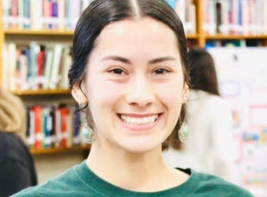
Jazmine Morales
Learning to Love Learning!
Jazmine Morales
Learning to Love Learning!
Jazmine Morales is a passionate educator who is driven to provide a quality, equitable, and meaningful education to her students. She aims to make learning fun and engaging, while maintaining a rigorous and productive learning environment. She has taught an array of science classes, such as Biology, Physiology, Marine Biology, and Biomedical Science. Jazmine has earned her B.S. in Kinesiology, B.A. in Spanish, and M.A. in Urban Education with an emphasis in Language and Culture. She values and follows teaching practices that are proven through research to be the most valuable and effective for the newer generations of students. She continues to grow as an educator by attending professional developments and community college courses. Finally, she strives to help raise self-advocating leaders who understand the importance in making a difference in the world, for not only those who exist today, but for those who lie seven generations ahead.